 Self-cycleTM IVF





-
-
-
 Infertility Counselling
-
 Female Infertility Treatment
-
 Andrology Treatment
-
 Fertility Enhancing Surgeries - Female
-
 Fertility Enhancing Surgeries - Male
-
 Endoscopy Treatment
-
 IUI Treatment
-
 IVF Treatment
-
 ICSI Treatment
-
 Advance IVF Solutions
-
 Embryology
-
 Vitrification Egg, Embryo, Sperm Freezing
-
 Preimplantation Genetic Testing (PGT)
-
 Donation Program Embryo / Egg / Sperm
-
 Self-cycleTM IVF
-
-
-
-
-
Cervical Stenosis Treatment: Methods and Expectations

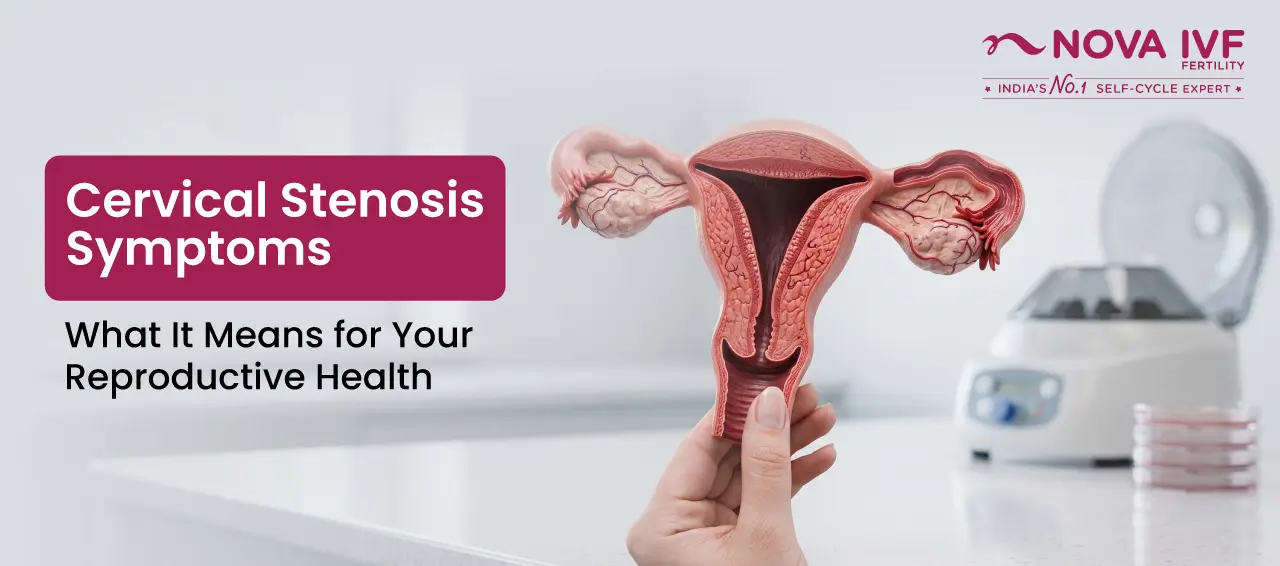
Cervical stenosis is a condition where the cervix of the female reproductive system is either too narrow or completely closed, hampering the passage between the uterus and vagina. Such a disorder affects the menstrual cycle as well as pregnancy in women. Cervical stenosis can be caused due to various reasons such as surgeries performed on the cervix (which can include cone biopsy, cryosurgery procedure, or colposcopy), trauma, and cervical cancer, radiation therapy on the cervix, recurring infection of the vagina, cervical nabothian cysts, and thinning or dryness after menopause.
Related Blog: Cervical Stenosis Symptoms: A Complete Overview
Treating Cervical Stenosis
In cervical stenosis treatment, doctors perform the following procedures:
- Dilation of the cervix: Doctors perform widening of the cervix, also called dilation of the cervix, to treat cervical stenosis. They insert small, lubricated metal rods (called dilators) via the cervix opening and then insert larger dilators progressively. This is done until appropriate dilation is achieved. Sometimes, the doctors also place a tube (called cervical stent) in the cervix for a period of 4 to 6 weeks in case an appropriate amount of dilation is not reached.
- Hysteroscopy evaluation of cervical and uterine cavity prior to this cervical dilatation might be required.
- Laser treatment: Scar tissues are formed in the cervix when the body is healing from the pap smear or endometrial biopsy conducted by doctors who take samples from the cervix for examination. These scar tissues are the reason why cervical stenosis occurs in women. Doctors suggest laser treatment for vaporising the scarring in the tissues as a treatment for cervical stenosis.
- Intrauterine device: In rare cases, an intrauterine device can be used for treating the case of cervical stenosis with severe dysmenorrhea. The device provides enough dilation that is required for draining the menstrual blood. Therefore, IUD can be used for contraception and also to reduce pain caused by dysmenorrhea.
Explore a comprehensive female fertility work-up
These are the common methods by which doctors treat cervical stenosis and help women have normal menstrual cycles and pregnancy. Cervix dilation helps in the easy flowing of menstrual blood from the vaginal canal and prevents the risk of hematometra or pyometra. Also, a dilated cervix is able to support the mobility of sperms better, leading to successful fertilisation of the egg. Once, the fertilised egg implants itself on the uterine wall, cervix supports the pregnancy by blocking any kind of infection from reaching the uterus. Therefore, a healthy cervix has a huge role to play a womans reproductive system.
Related Fertility Blogs